Prompt recipes
AI Fantasy Item Card Art Prompts with Space for Rules Text
Compose fantasy item art for a card layout, leaving practical space for a title and rules while keeping the object identifiable at print size.
By Onhand Studio · September 16, 2026 · 4 min read
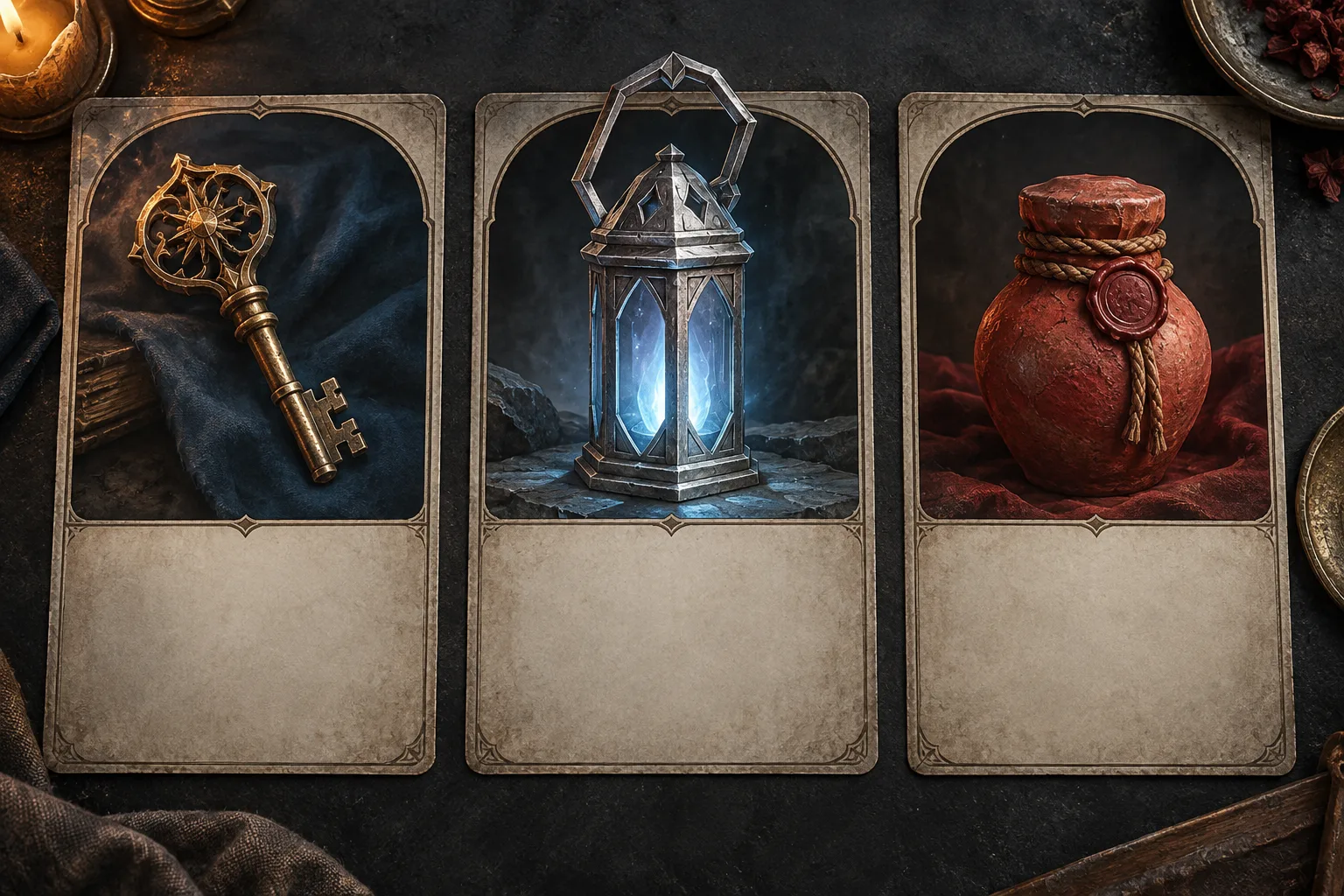
Reserve the reading area before choosing the effect
Decide where the card title and rules will sit before generating the item illustration. A tall object may work in a narrow upper panel; a wide shield may need a larger art window. Keep the image and typography separate so the text can stay accurate, readable and editable.
Make a rough card layout with placeholder text at the intended size. Measure the art window you have, then compose for that space. A full-frame object surrounded by smoke can look impressive alone and leave no room for a usable card.
Keep one lantern above a quiet lower area
Starting prompt (proposed, not a tested output)
Portrait fantasy card illustration, entire silver lantern in upper half, angular handle, blue light inside glass chamber, dark background fading to even lower third, restrained glow, painterly weathered metal.
The handle and chamber identify the lantern, while the pale light supplies its unusual quality. The lower area is reserved for the layout rather than filled with smoke. Inspect it after generation: words such as quiet or empty do not guarantee that the result will leave clean space for text.
Place the result into the rough card immediately. Use the actual title and a representative rules paragraph, even if the wording is still provisional. You will learn more from that composite than from judging the illustration alone. If the handle touches the title or the glow sits behind the rules, adjust the art window or choose a different crop.
Try two object shapes with different layout needs
Variant: a horizontal key
Portrait fantasy card illustration, bronze key diagonal across upper portion, open ring, stepped teeth, green patina, warm side light, plain dark background, quiet lower half, full object inside generous margins.
The key needs width, so a diagonal placement can fit it into the portrait panel. Keep both the ring and teeth visible; those are the identifying features. If the diagonal makes the key too small, enlarge the art window instead of covering part of the object with the rules. The card layout can change during exploration.
Variant: a compact sealed vessel
Fantasy card illustration, squat red clay vessel centered in upper half, wax-sealed lid, broad pale band, amber glow at lid seam, soft light, deep gray background, quiet lower third, generous margins.
This compact silhouette leaves more room around the item. The light at the seam communicates a contained effect without spreading across the entire card. Check whether the seal and lid remain separate parts. If decorative marks resemble writing, replace them during cleanup or simplify the painted band in a revised prompt.
Fix the art and text relationship in the layout
- Rules text crosses a detailed background: add a text panel in the layout tool. A separate panel gives you control over contrast and spacing.
- The item touches the card edge: reduce or reposition the art inside its window. Allow for the actual trim and bleed requirements of the chosen output.
- The glow hides the object: request a smaller light source and clearer unlit edges. The object should remain recognizable with the effect reduced.
- The image includes invented lettering: remove it and typeset the real title and rules separately. Do not preserve plausible-looking marks as readable text.
- Several cards look unrelated: compare object scale, art-window size, background value and lighting. Standardize the layout before asking for more illustrations.
Inspect a card-sized proof
- Can the item be identified at the final card size?
- Are title and rules fully readable against their background?
- Does the crop preserve the object’s identifying parts?
- Is the visual effect confined enough to keep the shape clear?
- Have spelling, symbols, dimensions and export settings been checked in the actual layout?
Keep the illustration file separate from the card document and export a proof before preparing the whole set. That separation lets you revise a rule without regenerating the picture. It also makes it easier to replace one item’s art while preserving the typography, spacing and hierarchy that make the cards usable together.