Prompt recipes
AI Creature Design Prompts Built Around a Plausible Body Plan
Develop a creature from habitat, movement and a few anatomical anchors, then inspect joints, balance and repeated structures before adding ornament.
By Onhand Studio · September 16, 2026 · 4 min read
Choose how the creature moves
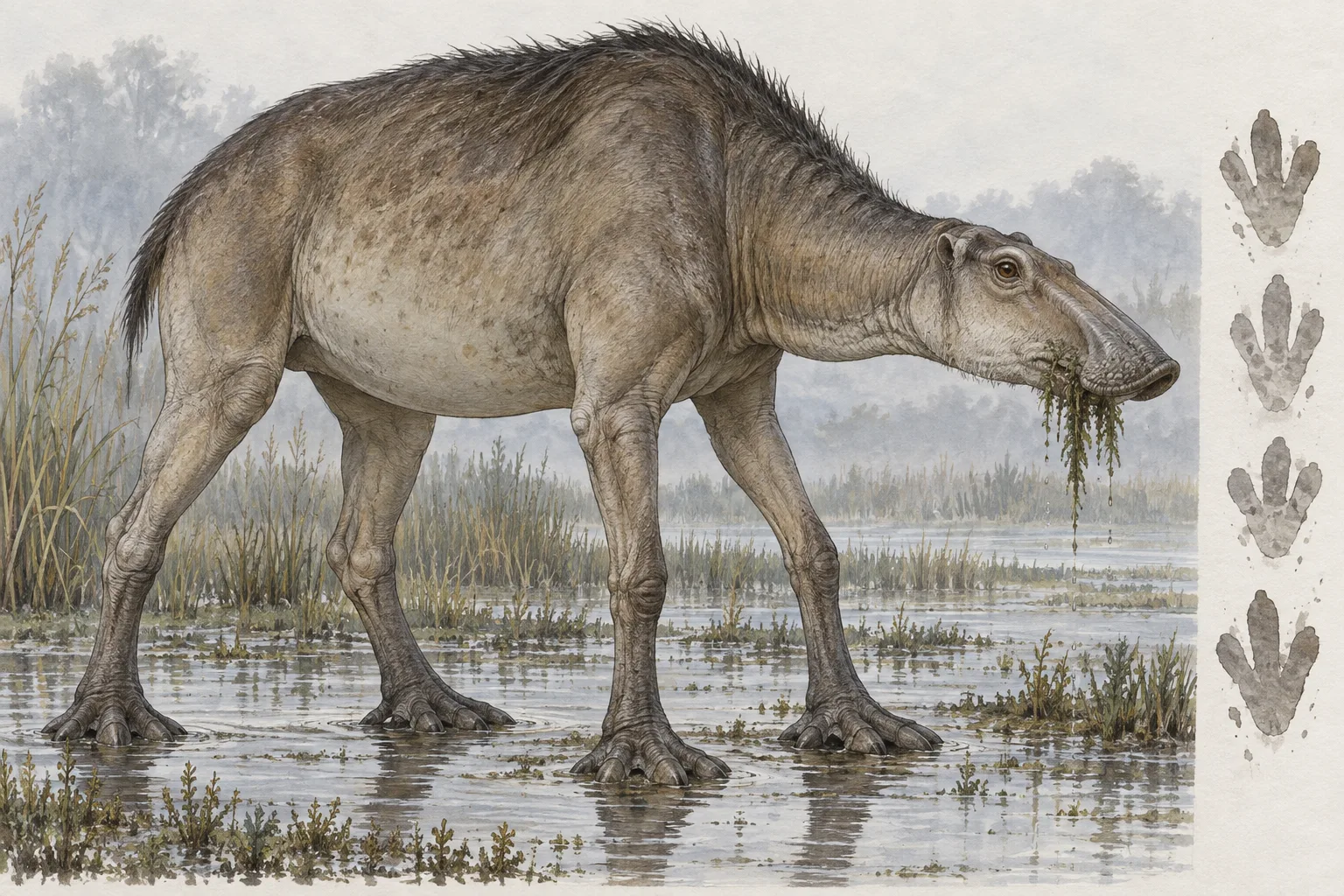
Begin a creature design with movement: wading, climbing, burrowing or gliding. Then choose a familiar body plan and make one substantial departure from it. A long-legged marsh browser with a broad filtering muzzle gives you a structure to inspect. Combining wings, armor, horns and extra limbs immediately makes that inspection harder.
Use plausible to mean visually understandable within the imagined setting. A concept image cannot demonstrate that an invented animal would survive or function biologically. The useful questions are narrower: where does its weight rest, how do its limbs attach, and what part of its environment explains its most distinctive feature?
Describe the whole animal in a simple stance
Starting prompt (proposed, not a tested output)
Marsh creature concept, full-body side view, four long legs with broad splayed feet, barrel torso, short muscular neck, flat muzzle, high eyes, sparse dark back fur, shallow water, pale background, subdued colors.
The shallow water connects the body to its habitat without hiding the legs. Broad feet and high eyes give you features to discuss as design choices. Keep the water low enough that the result reveals how each limb meets the ground. Mud and splashes can conceal extra feet or ambiguous joints.
Trace the outline from head to tail, then follow each limb back to the torso. Mark any connection you cannot explain. A convincing coat of fur can cover an impossible shoulder. Choose the version with the clearest body structure before deciding which markings or facial details you prefer.
Let a different habitat change the structure
Variant: a cliff climber
Cliff creature concept, full-body three-quarter view, four legs, low torso, strong shoulders, gripping feet with separate toes, heavy balancing tail, pale back fur, dark bare foot pads, broad ledge, plain rock background.
This animal shifts from height to a low center of mass and visible contact with rock. Inspect the feet and tail against the stance. The tail should connect to the pelvis and clear the ground rather than emerge from a rear leg. Keep the ledge broad while testing anatomy; a dramatic cliff edge adds an unnecessary balance problem.
Variant: a nocturnal digger
Nocturnal digger concept, four legs, round body, broad forelimbs with digging claws, smaller rear feet, blunt snout, small ears, gray-brown fur, full-body side view beside burrow, overcast light, visible limb attachments.
The forelimbs become the dominant shape because digging is now the defining action. Keep the lighting bright enough to inspect them even though the animal is described as nocturnal. Darkness can establish mood later. At this stage, count digits only where they are visible and flag uncertain areas to resolve in a drawing.
Correct anatomy before adding surface detail
- Extra or fused limbs appear: reduce the pose to standing in profile and keep the background plain. The result still needs an actual limb count.
- The head belongs to a different scale: describe its proportion relative to the torso. Avoid adding a second animal reference that competes with the chosen body plan.
- Armor covers every joint: leave flexible gaps at shoulders, hips and elbows, then inspect whether the limb could move through the suggested range.
- The animal seems to float: request visible foot contact and a restrained ground shadow. Check all supporting feet against the same ground plane.
- Decorative features dominate: keep one distinctive adaptation and remove the rest until its attachment and role are clear.
Review the creature as a moving body
- Can every visible limb be traced to an appropriate attachment?
- Does the stance support the apparent weight of the body?
- Are the main features connected to a stated habitat or behavior?
- Do fur, plates or folds reveal rather than conceal important joints?
- Have alternate views been checked for changes in proportion and anatomy?
Save the selected concept with a short movement note and a list of unresolved anatomical choices. For animation or sculpting, an artist will need to settle the hidden side, joint structure and range of motion. Additional generated views can offer ideas, but they should be reconciled with the approved body plan instead of treated as automatic documentation.